

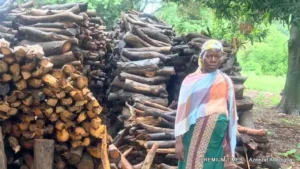
FCT residents turn to firewood as cooking gas price soars
By Zulaiqoh Ayoku
Some residents of the Federal Capital Territory (FCT) have lamented the high cost of cooking gas, saying it has forced them to combine it with firewood and charcoal for cooking.
The residents said that with cooking gas prices fluctuating between ₦1,380 and ₦2,000 per kilogram, households are adopting cheaper cooking methods to cope with rising living expenses.
They told the News Agency of Nigeria (NAN) on Wednesday in Abuja that some households now combine traditional cooking fuels with Liquefied Petroleum Gas (LPG) to reduce cooking costs.
A survey conducted by NAN showed that a bag of charcoal now sells for between ₦10,000 and ₦15,000, while a mini-truck load of firewood goes for between ₦10,000 and ₦13,000.
Mrs Grace Ameh, a firewood seller in the area, said she buys firewood in bulk for ₦85,000 and sells five pieces for ₦1,000.
Ameh said patronage varies, with some residents preferring LPG while others rely on firewood.

“Some people are used to gas and some are used to firewood, so I cannot say whether firewood sells faster than gas,” she said.
She described cooking gas as expensive, adding that the availability of firewood in the area has made it an alternative for households struggling with the cost of LPG.
“I am managing the smoke because there is nothing I can do about it. At least, here it is still bushy; I can enter the bush and get firewood to cook. Gas is stressless and better than firewood, but I don’t have a choice,” she said.
Similarly, Mrs Ngozi Okeke, a charcoal vendor and resident of the area, said the business is no longer as lucrative as it used to be because residents now have other cooking options.
Okeke attributed the use of charcoal by some households to the scarcity of kerosene, noting that the price of charcoal also fluctuates depending on the cost at which vendors purchase it.
She said vendors sometimes adjust the quantity of charcoal sold to maintain their profit margins, adding that a bag of charcoal that sold for between ₦3,000 and ₦4,500 about four years ago now costs between ₦9,000 and ₦10,000.
Another resident, Mrs Asisat Yunusa, said she currently refills a kilogramme of cooking gas for ₦1,500.
Yunusa said a kilogramme lasts about five days, while two kilogrammes can last between one and two weeks, depending on how frequently she cooks.
She added that gas purchased from filling stations lasts longer than that bought from black-market vendors.
Also speaking, Miss Sherifat Bello, a resident, said she combines cooking gas with charcoal because charcoal is more accessible.
Bello said she sometimes buys gas from black-market vendors, noting that one kilogramme, which previously sold for ₦1,400, now costs ₦1,700.
She said the quantity lasts between three and four days when purchased from the black market, while the same quantity from a filling station can last up to one week.
Mr Paul Ibe, a taxi driver, said the cost and accessibility of cooking fuels are influencing household choices, with some residents combining different energy sources to manage expenses.
Ibe said although LPG is more convenient and produces less smoke, its high cost and the distance to some filling stations have made firewood and charcoal more accessible alternatives for some households.
He appealed for more affordable and accessible cooking fuel options to ease the financial burden on households and enable more residents to adopt cleaner cooking methods. (NAN)
Edited by Abujah Racheal/Dorcas Jonah