[ad_1]
The federal government says it is considering the introduction of a new tax-credit scheme as an alternative to traditional tax holidays.
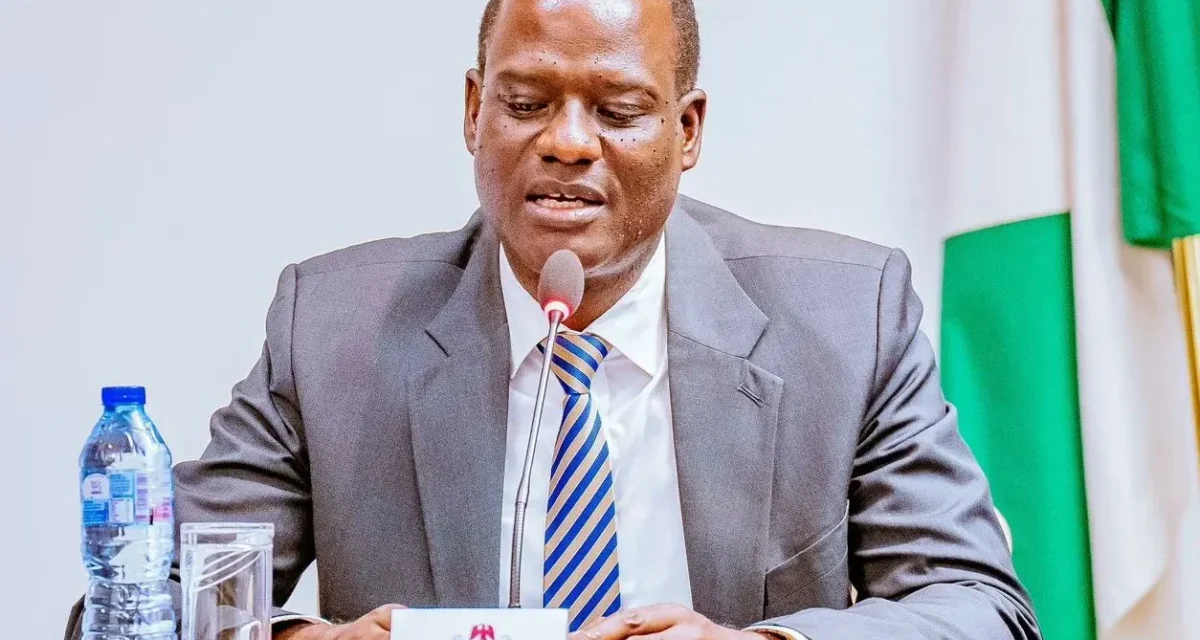
The minister of finance and coordinating minister of the economy, Taiwo Oyedele made the disclosure during a presentation at an investor engagement on the sidelines of the 2026 International Monetary Fund (IMF) and World Bank annual meetings in Bangkok, Thailand on Wednesday.
Oyedele said the proposed tax-credit scheme, called the Economic Development Incentive (EDI), comes with conditions that investors must meet to qualify for the scheme.
“It’s called Economic Development Incentive, where you get a tax credit,” he said.
He also said the government could not guarantee that investments would be exempt from taxes, but stressed the need for clarity on the rules governing different asset classes and business activities.
Oyedele further said the ministry of finance was working with the National Bureau of Statistics (NBS) to improve economic information, including employment statistics and the development of a producer price index to complement the consumer price index.
…Single-digit inflation on course – Cardoso
Also speaking, the Central Bank governor, Mr. Olayemi Cardoso said it was critical for the Monetary Policy Authority to set its inflation targeting mechanism in order to maintain price stability.
“It is important we give ourselves this as our target is to recognise the fact that inflation is probably the biggest stance on the poor, and so it is critical that we bring it down to levels that are more manageable.
“In this instance, inflation has gone from 34, 35 per cent to about 15, and yes, that’s a significant decrease, very significant. But what we are saying basically is that we are not going to rest.
“And our medium term target is to bring it down to single digit. Of course, as we embrace inflation targeting, that will obviously be a lot more open and transparent, and people will be able to have a clearer sense of the road of travel,” he explained.
On how policies will impact the poor, he said, “Arguably the most vicious tax you have on the poor is inflation. It is inflation, and being able to bring down inflation obviously affects the ordinary person. It affects everybody.
“Two, I would argue that what we’ve been able to accomplish in terms of having very robust external reserves, highest in 18 years, is also something that affects the ordinary person, because without that, a lot of the headwinds that other countries face, we would be facing them, in fact, in a perhaps worse way than they are facing.
The good thing was that the reforms and the policies were things that were thought through, and they started to implement early enough, such that when those headwinds started to come, not only from the war, but also from the discussions around putting on tariffs. Our exchange rate has held stable…As a result of which, it has an indirect effect on everybody.
“There is stability, which is setting the platform for investment, and in turn setting the platform for growth,” the CBN governor further stated.
On her part, Patience Oniha, director-general of the Debt Management Office, said the government’s issuance calendar covered financing requirements and new borrowing.
Oniha said issuance volumes were not fundamentally different from those in the third quarter, although activity had been slower in the first and second quarters.
UPDATE NEWS:
Nigerians can now invest ₦2.5 million on premium domains and profit about ₦17-₦25 million. All earnings paid in US Dollars. Rather than wonder,
click here to find out how it works.
[ad_2]
Source link