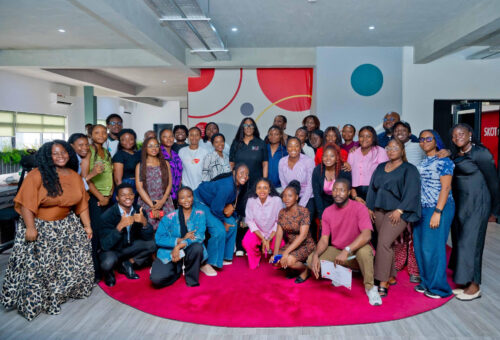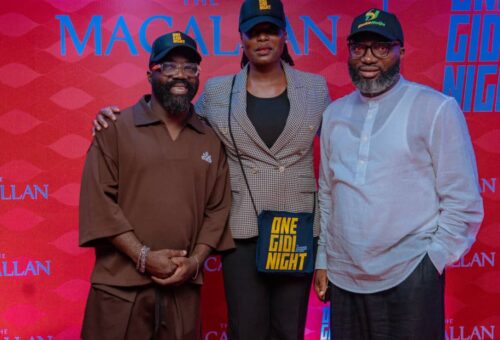

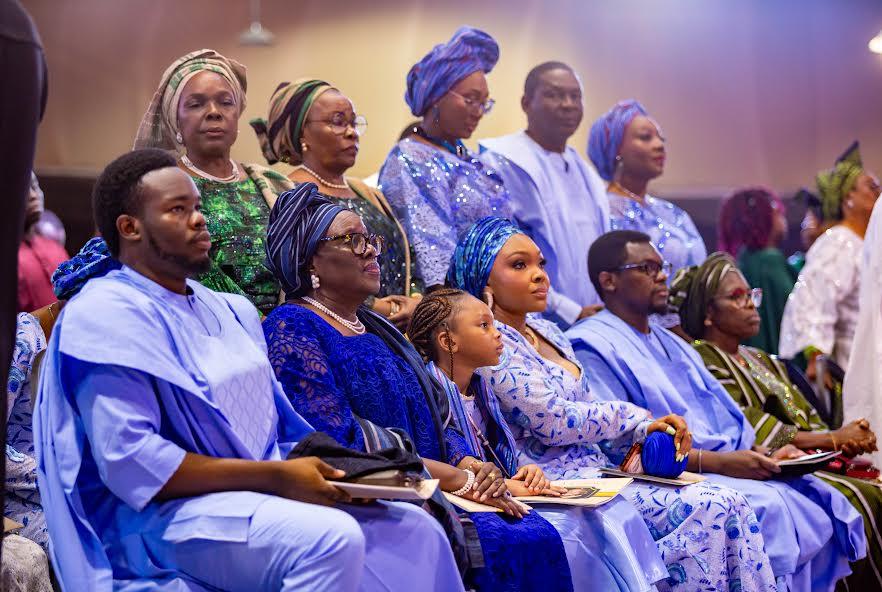
It was not just a funeral; it was a final ovation as the city of Lagos stood still on Friday, October 2nd, when This Present House, Freedom Way, Lekki, opened its doors for the last act of a man who gave Nollywood its soul. Family in royal blue, government dignitaries, and a constellation of Nollywood stars gathered not to mourn, but to celebrate 84 years of grace, grit, and greatness.
Oludotun Baiyewun Jacobs, the boy from Kano who conquered the West End, Hollywood, and then came home to build an industry, had taken his final bow on September 16th. On this day, Lagos bowed back. Writes MARY NNAH
It did not feel like a funeral. It felt like a state event, a family reunion, and a theatrical finale all in one.
When the doors of This Present House, Freedom Way, Lekki opened on Friday morning, Lagos came to a halt to bid farewell to its most beloved son – Oludotun Baiyewun Jacobs, MFR, the man the world knew simply as Olu Jacobs, who died on September 16th, 2026, at the age of 84.
The blue theme said it all – royalty. His widow, the iconic actress Joke Silva, sat flanked by their sons, Olusoji and Olugbenga Jacobs, and grandson Oludayo, all in shades of royal blue. Their small family, as Olusoji would later say, had been made large by love.
This was the final act of a two-day farewell. On Wednesday, September 30th, the industry had gathered for a Night of Tributes and Service of Songs – actors, directors, producers weeping, laughing, mimicking his iconic baritone.
On Friday, it was time for the church to take over. The roll call inside This Present House spoke volumes about the life he lived beyond the screen.
In attendance were Lagos State Deputy Governor Obafemi Hamzat and his wife, Oluremi Hamzat; First Lady of Lagos State, Dr. Ibijoke Sanwo-Olu; former First Lady of Lagos, Dame Abimbola Fashola; former Ogun State Governor, Ibikunle Amosun; former Ekiti First Lady, Erelu Bisi Adeleye-Fayemi; Hon. Commissioner for Tourism, Arts and Culture, and other government dignitaries.
And then Nollywood came in full force – Shaffy Bello, Kate Henshaw, Ireti Doyle, Patrick Doyle, Keppy Ekpeyong, Stan Nze, OC Ukeje, Lala Akindoju, Stephanie Okereke Linus, Ernest Obi, Morayo Afolabi-Brown and dozens more.
When soul singer Darey Art Alade stepped forward to perform his classic “Pray For Me,” there was hardly a dry eye in the hall.
Lagos Deputy Governor Hamzat described him simply as “an icon of the entertainment industry.”
“Uncle Olu Is Free” – Pastor Tony Rapu
Founder of This Present House, Pastor Tony Rapu, mounted the pulpit and delivered what many described as a sermon for the living, not the dead.
He opened with Revelation: “Blessed are the dead who die in the Lord… they rest from their labours, and their works do follow them.”
Then he painted pictures. Of a woman wailing uncontrollably at a funeral he once attended, wanting to jump into the grave. “Leave her, she won’t jump in,” he had told people. “She is not really crying for the man. She has problems, and she’s crying over her problems.”
He likened it to when Jesus carried the cross, and women wept for him. “Jesus said, weep not for me, weep for yourselves.”
“Uncle Olu has gone to rest,” Pastor Rapu declared. “We are the ones facing the crisis of the world today. The wars, the hunger, the poverty, the hardship, the pains. Before 40, you are told to succeed. After 40, you are told to preserve what you have made. And then comes blood pressure, diabetes, prostate, dementia, arthritis, marriage problems, children’s problems, social media battles, depression.”
He recalled counseling area boys: “I asked one, why do you smoke marijuana so much? Why don’t you stop fighting? He said, you can’t stop the fight, the fight is in his blood. But when he smokes weed, it makes him fight in slow motion.”
“Many of us are struggling, but in slow motion. Uncle Olu is free. I think we should clap. Let’s just clap for him”, Pastor Rapu said. And the hall erupted in applause. He went on to challenge everyone about legacy.
“If death is an eventuality, why are people so surprised when it happens?” he asked.
He closed with the words that have now gone viral: “To live in the hearts of those you love is never to die. The memory of the righteous is a source of blessing. Death takes many things, but memories last forever. What will your tribute book look like? What will you leave behind apart from cars and houses? Make the world a better place”, Rapu concluded his sermon.
A Son’s Thanks
When Olusoji Jacobs rose to give the vote of thanks, his voice was steady, his gratitude profound.
“Good morning, once again, your excellencies. Distinguished ladies and gentlemen. On behalf of the Jacobs family, thank you for being here this morning to honor the life of our father,” he began.“
To Pastor Tony and Pastor (Mrs.) Nkoyo Rapu and all the other officiating pastors, thank you for leading us in worship, in prayer, and in the word. You have held us up today by reminding us that death is not the end for those who are in Christ, and that we sorrow not as those who have no hope.”
He thanked the First Lady of the Federal Republic of Nigeria, the Executive Governor of Lagos State, the Deputy Governor of Lagos State, the First Lady of Lagos State, Dame Fashola, Erelu Fayemi, and all dignitaries.
“Our family is small, and your love has made it much larger these past few months. We are deeply grateful.”
He thanked the organising committee “who carried out the service with care and tirelessness.”
The Boy From Kano Who Conquered The World
The story they celebrated was more than 84 years long. It was over five decades of arts, excellence, service and legacy.
Oludotun Baiyewun Jacobs was born on July 11, 1942 in Kano, of Oke-Itoku heritage from Abeokuta, Ogun State. He grew up in Kano, where his early fascination with performance developed through school drama, debating societies and church programmes.
The defining moment came when he watched legendary theatre practitioner, Chief Hubert Ogunde, perform. That night, the boy knew he would be an actor.
At a time when professional acting was not regarded as a conventional or secure career, he chose his calling anyway. He travelled to the United Kingdom ostensibly to study marketing – and he excelled at it. But his spirit refused a single path.
While studying marketing, he pursued his passion for the stage, gaining admission to the prestigious Royal Academy of Dramatic Arts, RADA, London.
Marketing would become his secret sustenance. When acting engagements were few, Olu could always find his footing as a market researcher and marketing executive. A family-owned company took a particular liking to him and became a professional home. They valued his reliability, warmth, and diligence , and they understood his dream.
They gave him something priceless: freedom. Whenever an acting job came, they let him go. Whenever the curtain fell, they welcomed him back. For years, that remarkable arrangement sustained him until the gaps between acting jobs grew shorter and the career he had patiently nurtured took flight.
His years in Britain laid the foundation for the legend the world would know. He worked extensively in theatre at the Royal Court Theatre and the National Theatre of Great Britain. He performed Tom Stoppard’s Night and Day alongside Diana Rigg and John Thaw for 18 months every single day except Mondays in the West End.
On British television in the 1970s, he appeared in The Professionals, The Tomorrow People, Barlow at Large, The Witches and the Greenigog, where he played the mystique character, “Twebele Alabaster.
Internationally, he featured in The Dogs of War (1980), Baby: Secret of the Lost Legend (1985) and Roman Polanski’s Pirates (1986).
Return To Nigeria – And A Grief That Almost Broke Him
When Olu returned to Nigeria, he did not return quietly. He stepped into Wole Soyinka’s world, from Jero’s Metamorphosis to Second Chance, and then The Third Eye, where he immortalised Inspector Dafe. But it was in Ahmed Yerima’s The Trials of Oba Ovonramwen that his artistry reached another dimension. Playing the revered Oba, Olu inhabited the role with such physical and emotional conviction that he seemed transformed into the historical monarch himself – in bearing, dignity and stillness.
Yet, while he was giving life to a king on stage, life was preparing a blow no script could have written. During the production, Olu and Joke lost their beloved 10-year-old daughter, Dayo.
There are losses for which language is inadequate. After Dayo’s funeral, Olu returned to the stage. He returned to his character. He returned to work, carrying a grief no audience could see.
For Olu, the stage was more than a profession. It was a refuge. He would later say returning to acting helped keep him sane. It didn’t erase his pain – it gave him somewhere to place it.
The Bridge And The Partnership
Olu Jacobs belonged to the bridge generation – the generation that connected Nigeria’s traditional theatre to television and to Nollywood. He was not merely an actor who witnessed Nollywood’s growth. He was one of the practitioners whose experience and professionalism gave the industry its foundation.
Beyond performance, he was a mentor. The Presidency would later describe him as “a towering figure whose career across theatre, television and film inspired a generation.”
And away from the lights, he shared a remarkable partnership with fellow distinguished actress Joke Silva. Together they built a family – sons Olusoji and Olugbenga, grandson Oludayo – and a shared vision: The Lufodo Group, with interests in film production and distribution, and the Lufodo Academy of Performing Arts (LAPA), which has trained hundreds of performers.
For Joke, he was not the celebrated actor known to millions. He was a husband, father, collaborator, companion and friend.
His honours were many: African Movie Academy Award for Best Actor in a Leading Role for Dancing Heart (2007), Africa Magic Viewers’ Choice Awards Industry Merit Award for Outstanding Achievement in Acting (2013), Member of the Order of the Federal Republic, MFR (2011), and AMAA Lifetime Achievement Award (2016).
A Life Well Lived
As the service ended and the casket was wheeled out of This Present House, the words of Pastor Rapu lingered: “Reach out and touch somebody’s heart. Make the world a better place.”
Olu Jacobs did. He showed that an African actor could be trained, tolerant, internationally experienced, and deeply rooted in his own culture. He moved effortlessly between Shakespeare and Soyinka, West End and Nollywood, British television and African cinema.
The curtain has now fallen on this epic performance. But the characters he created will continue to live in the memories of audiences. The lessons of his career will continue to inspire practitioners. The institutions he helped build will continue to nurture talent.
Oludotun Baiyewun Jacobs, MFR – actor, pioneer, mentor, cultural ambassador lived a life devoted to craft. He gave his voice to characters, dignity to profession, and excellence to the arts.
His was a life well lived, a career beautifully fulfilled, and a legacy that will endure forever. May his memory be a blessing and may his soul rest in perfect peace.