
The Kano State Chamber of Commerce, Industries, Mines and Agriculture (DALCCIMA) has warned that high interest rates, rising living costs and multiple taxation are putting businesses in the state under severe pressure, questioning whether small-scale entrepreneurs can survive the fourth quarter of 2026.
The chamber said the apparent stability in some economic indicators had yet to translate into meaningful relief for businesses and households, warning that the gap between official economic figures and realities in the markets needed urgent attention.
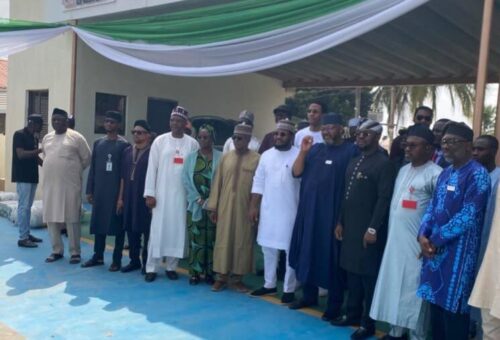
Speaking at a press conference in Kano, the Vice President , Business Development, DALCCIMA, Adamu Abdulkadir Gambo said it would use the dialogue, themed: “Your Economy. Your Business. Your Voice,” to interrogate the impact of government economic policies, inflation, foreign exchange fluctuations, high borrowing costs and infrastructure projects on Kano’s economy.
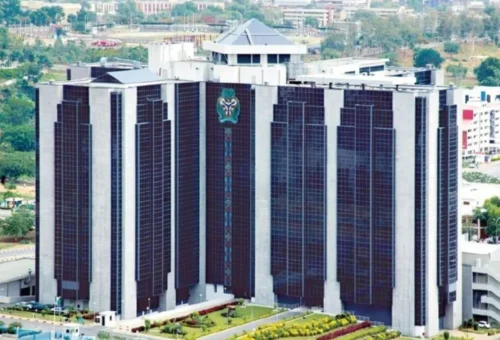
“High MPR is choking businesses while trying to cure inflation. Are we killing the patient to cure the disease?” the chamber asked, referring to the Central Bank of Nigeria’s high Monetary Policy Rate.
It expressed concern that lending rates of between 28 and 35 per cent could make it increasingly difficult for small business owners, including traders and artisans, to access credit and expand their businesses.
The chamber also questioned whether the reported plateau in headline inflation had translated into lower prices of food and other essential commodities for ordinary residents.
It said the review would examine whether the cost of a mudu of rice, transportation from Tarauni to Sabon Gari and school fees had reduced, as well as the impact of food and core inflation on households and micro, small and medium enterprises.
“The numbers tell a story, but your experience reveals the reality. That is the gap we want to close,” it said.
DALCCIMA also expressed concern that stability in the foreign exchange market had not necessarily made imported goods more affordable for Kano traders, particularly those who transport their goods from Lagos.
It said the review would examine the actual cost of foreign exchange transactions and their impact on the competitiveness of Kano businesses.
On government spending, the chamber said it would scrutinise Kano State’s capital budget implementation, demanding to know how much had been released for roads, schools, markets and industrial clusters in the third quarter.
It also questioned whether increased monthly allocations from the Federation Account Allocation Committee (FAAC), following the removal of fuel subsidy, had translated into more infrastructure, jobs and business opportunities.
The chamber identified the Ajaokuta-Kaduna-Kano (AKK) gas pipeline and Kano-Maradi railway as two major projects whose progress could significantly shape the state’s economic fortunes.
It said the availability of gas through the AKK pipeline could provide cheaper energy for manufacturers, particularly those operating in the Challawa industrial area.
It also described the Kano-Maradi railway as a strategic trade corridor capable of connecting Kano to Niger Republic and the wider West African market, creating opportunities for traders, logistics operators and warehouse owners.
The chamber further said it would assess the viability of compressed natural gas (CNG) and electric vehicles in Kano, particularly their affordability and accessibility to commercial transport operators.
It listed CNG availability, conversion centres and conversion costs among the issues requiring urgent attention, especially for tricycle and bus operators struggling with rising petrol prices.
DALCCIMA also questioned the performance of the Dala Inland Dry Port, asking whether the facility had reduced importation costs for Kano businesses or was merely operating as a warehouse.
Other issues to be examined include youth unemployment, electricity supply, diesel prices, multiple taxation, market levies and the ease of doing business.
The chamber said the ultimate objective was to determine whether small businesses could survive the final quarter of the year, whether households could afford food, transportation and school fees, and where investors should put their money in Kano.
It urged businesses, investors, market associations, development partners and residents to participate in the dialogue.
The chamber stressed that it was funded entirely by members, including traders in Kantin Kwari, millers in Dawanau, manufacturers in Sharada, miners in Shanono and farmers in Bunkure, without government intervention.
“What we will give Kano is the truth about its economy,” it said.
UPDATE NEWS:
Nigerians can now invest ₦2.5 million on premium domains and profit about ₦17-₦25 million. All earnings paid in US Dollars. Rather than wonder,
click here to find out how it works.