
[ad_1]
Human resource practitioners and business leaders have urged Nigerian organisations to prioritise employee retention, competitive compensation, skills development and workplace culture to improve productivity and prepare for the Federal Government’s projected trillion-dollar economy by 2030.
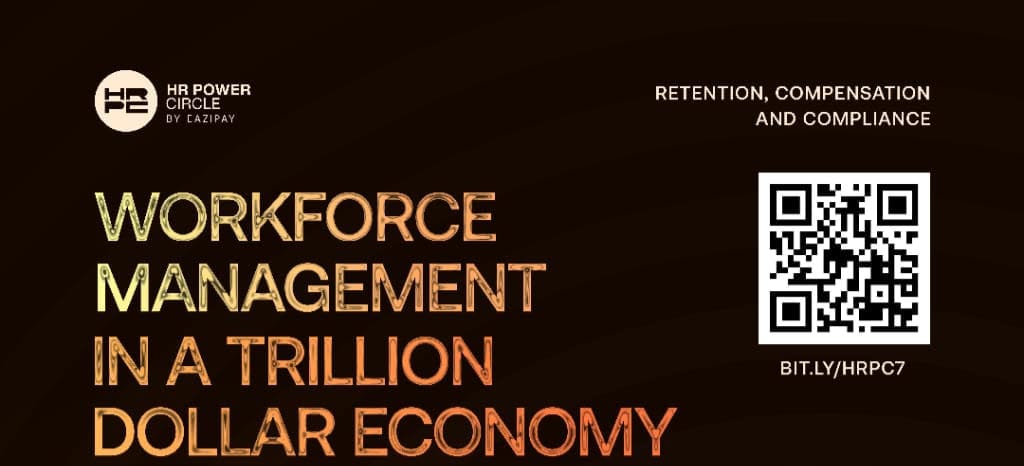
The call was made on Thursday at the seventh edition of HR Power Circle, organised by Eazipay, a Y Combinator-backed company, in Lagos, with the theme, “Workforce Management in a Trillion-Dollar Economy: Retention, Compensation and Compliance.”
The event brought together HR professionals, people operations practitioners and business leaders across industries. It was the programme’s first physical edition after six virtual editions.
Speaking on behalf of Eazipay’s Chief Executive Officer and Co-founder, Asher Adeniyi, the Head of Marketing and Strategy, Fortune Kolawole, said organisations must go beyond recruitment to create environments where employees could perform optimally.
He said economic growth could intensify competition for skilled workers, making employee retention, fair compensation and regulatory compliance increasingly important.
Kolawole added that companies risk losing talented employees to competitors if they failed to provide supportive working environments.
He cited accommodation closer to workplaces and transportation support as measures businesses could adopt to improve employee welfare and productivity.
He explained that Eazipay, a technology company focused on human resource technology, employee management, compliance and payroll, established HR Power Circle to enable practitioners to exchange ideas and learn from experienced professionals.
The company’s Business Development Manager, Akin Tayo Taiwo, described the event as successful, highlighting panel discussions and breakout sessions that allowed participants to learn from industry experts.
At the panel session, the Director of People, Culture, Experience and Operations at TVC Communications, Oluwakemi Shonubi, stressed the importance of continuous employee development as businesses expand.
She said organisations sometimes failed to recognise when their workforce needs had outgrown existing structures, leaving employees in leadership positions without the skills required to manage larger teams.
Shonubi noted that technical competence alone was insufficient for effective leadership, stressing the need for skills in conflict management, difficult conversations and team motivation.
She urged businesses to identify skill gaps and provide targeted training aligned with their growth stages and future needs.
Similarly, the Head of Human Resources at SYNLAB Nigeria, Adeyemi Ajayi, called for structured compensation systems based on employees’ responsibilities, skills, competencies and contributions.
He said organisations should conduct proper job evaluations and compare similar roles to establish fair and competitive remuneration.
According to him, businesses must understand the value they are rewarding before designing compensation packages.
The Head of People Operations at Fourthcanvas, Oluremi Akinfaderin, emphasised the need to embed organisational culture in everyday workplace practices.
She said businesses needed systems to sustain their values as they expanded, urging leaders to identify employees who could serve as culture champions within their teams.
Akinfaderin added that HR professionals must understand business objectives while recognising the people behind organisational performance.
Meanwhile, HR consultant and founder of HR Cunic, Emmanuel Faith, advised small and medium-sized enterprises (SMEs) to recruit employees whose interests aligned with their missions.
He said businesses unable to offer the highest salaries could attract and retain talent by providing clear career progression opportunities and helping employees connect their professional ambitions with organisational goals.
The experts agreed that effective workforce planning, competitive pay, continuous development and strong workplace cultures were essential to attracting and retaining talent while improving productivity.
UPDATE NEWS:
Nigerians can now invest ₦2.5 million on premium domains and profit about ₦17-₦25 million. All earnings paid in US Dollars. Rather than wonder,
click here to find out how it works.
[ad_2]
Source link