
[ad_1]
By Al-Mustapha A. Mustapha
Nigeria is targeting a N750 trillion capital market by 2036 as the government moves to mobilise domestic savings for investment and reduce reliance on bank lending and foreign sources of financing.
The target, up from a baseline of about N250 trillion, is contained in the Nigerian Capital Market Master Plan 2.0 (2026–2036), unveiled by the Securities and Exchange Commission (SEC) on Monday in Abuja alongside a National Savings Scheme designed to encourage Nigerians to save and invest.
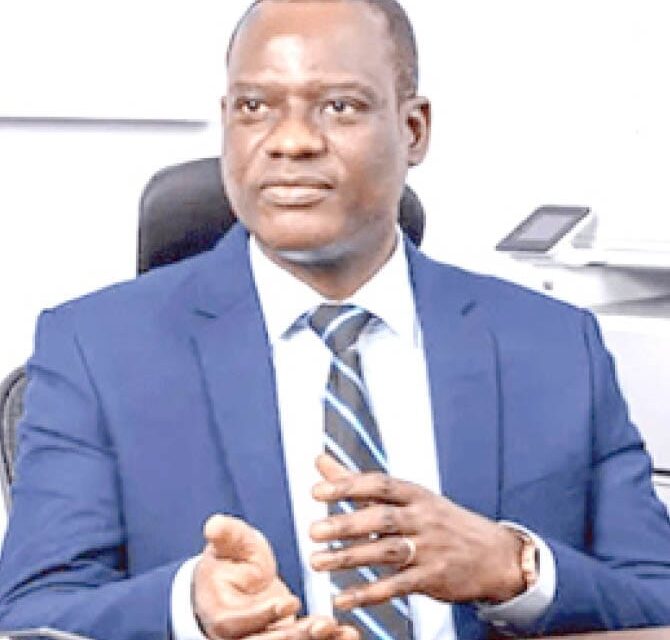
The Minister of Finance and Coordinating Minister of the Economy, Taiwo Oyedele, said a deeper capital market was needed to support Nigeria’s ambition of building a $1 trillion economy and ensure businesses could access long-term capital.
“Higher share prices alone do not transform an economy. What matters is whether capital reaches productive businesses and whether ordinary Nigerians share in the returns,” he said.
Oyedele said the government would support the development of new investment products, including infrastructure funds, real estate investment trusts and sustainable finance instruments.
He said selected state-owned enterprises would be encouraged to list on the Nigerian Exchange to improve transparency and allow Nigerians to share in their value, while private companies would be encouraged to list through incentives rather than compulsion.
The SEC Director-General, Emomotimi Agama, said the market’s growth in value had not translated into sufficient participation by Nigerians, while businesses and infrastructure projects remained heavily reliant on banks, government budgets and foreign sources of capital.
“Too few Nigerians own a share, a bond or a unit in a collective investment scheme. Too much of our savings sits idle, outside the formal system, quietly eroded by inflation,” Agama said.
He said the National Savings Scheme would provide Nigerians with a formal channel to save and invest, with funds managed by professional fund managers registered with the commission.
“The National Savings Scheme is, first and foremost, an instrument of inclusion,” he said.
Agama said the scheme had legal backing under the Investments and Securities Act 2025. He added that the SEC would work with the Nigeria Revenue Service and FSD Africa on its implementation, including tax incentives intended to encourage savings.
He said the new master plan was developed through consultations with market operators, investors, regulators and government institutions, with implementation to be tracked through assigned responsibilities, timelines and performance measures.
“Every commitment in NCMMP 2.0 will have an owner, a timeline and a scorecard, and we will report progress openly to this nation,” he said.
Agama said equity market capitalisation crossed N100 trillion for the first time in January and reached fresh records above N160 trillion in September. He added that the All-Share Index rose by about 60 per cent in 2026, following a 51 per cent return in 2025.
The Deputy Chief of Staff to the President, Senator Ibrahim Hassan Hadejia, who represented Vice-President Kashim Shettima, said the capital market should play a greater role in financing infrastructure and development rather than leaving the government dependent on public budgets and foreign borrowing.
Hadejia said the Nigerian Exchange All-Share Index had risen from about 35,000 points in May 2023 to about 246,000 points, while the value of listed equities had grown from about N30 trillion to nearly N160 trillion.
“The capital market is a bridge between the savings of Nigerians and the investment Nigeria needs,” he said.
He added that the National Economic Council would work with the SEC to help states understand how to use the capital market responsibly to finance development projects.
UPDATE NEWS:
Nigerians can now invest ₦2.5 million on premium domains and profit about ₦17-₦25 million. All earnings paid in US Dollars. Rather than wonder,
click here to find out how it works.
[ad_2]
Source link