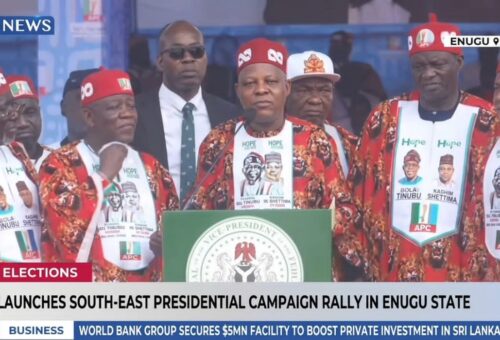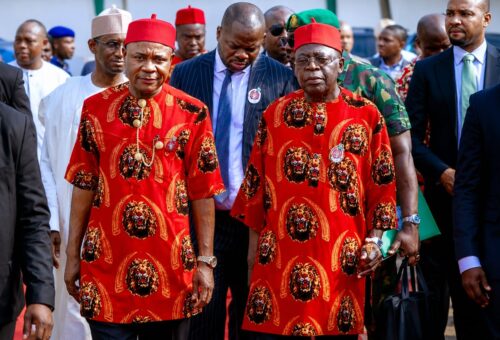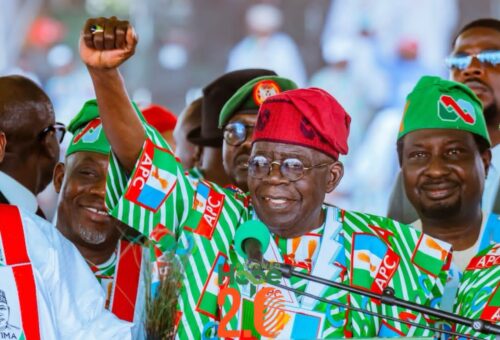
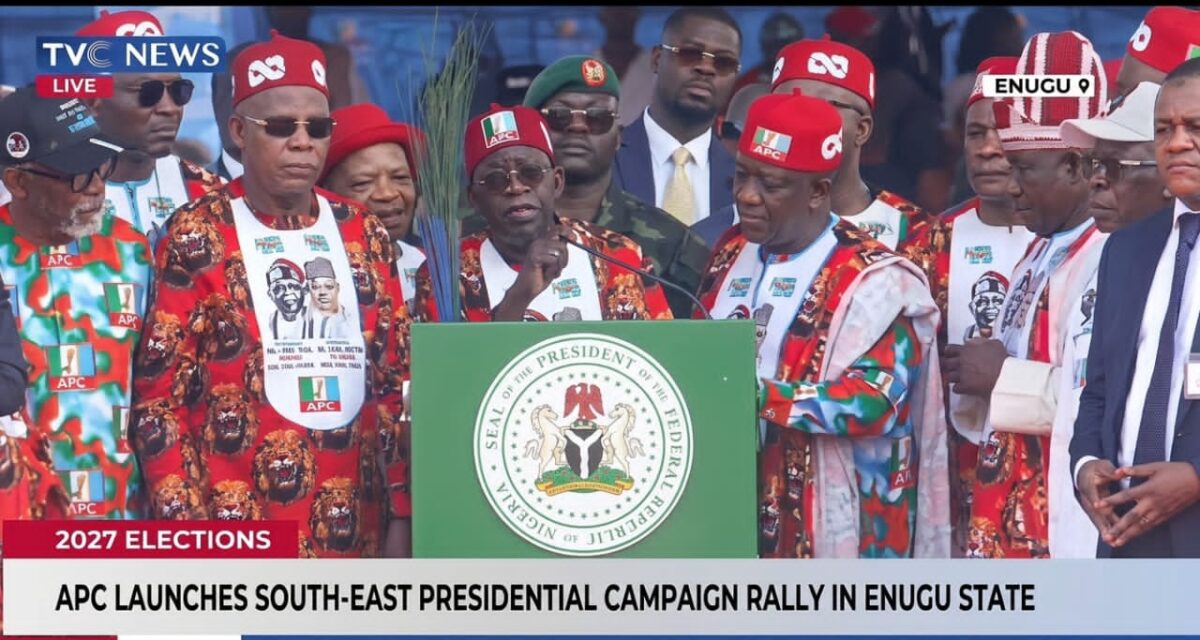
President Bola Ahmed Tinubu has reaffirmed his administration’s commitment to expanding infrastructure across Eastern Nigeria, highlighting the approval of the Eastern Gas Pipeline and the Eastern Nigerian Railway Line as significant steps towards strengthening national connectivity, economic integration and sustainable development.
Speaking at the Renewed Hope 2.0 engagement in Enugu, President Tinubu disclosed that his administration was working in collaboration with Enugu State Governor, Peter Mbah, to ensure the realisation of the Eastern Gas Pipeline project. He also announced the approval of the Eastern Nigerian Railway Line, describing the initiatives as part of a broader commitment to connecting the East, South and North through strategic infrastructure investments.
According to the President, these projects reflect a deliberate effort to bridge regional infrastructure gaps, unlock economic opportunities and establish stronger transportation and energy networks capable of supporting Nigeria’s long-term development aspirations.
The proposed Eastern Railway Line is particularly significant for the South-East, a region whose commercial strength, entrepreneurial capacity and industrial potential have long depended on efficient transportation networks. Improved railway connectivity would provide opportunities for easier movement of passengers and goods, reduce transportation bottlenecks, strengthen regional trade and improve access to markets across the country.
Similarly, the Eastern Gas Pipeline has the potential to strengthen energy infrastructure, support industrial expansion and improve access to natural gas for businesses and industries. Its successful implementation could contribute to job creation, attract investment and enhance the economic competitiveness of the region.
President Tinubu further emphasised that infrastructure development requires purposeful leadership, strategic planning and cooperation between federal and state governments. His reference to Governor Peter Mbah’s partnership underscores the importance of collaboration in translating national development priorities into tangible projects.
He also challenged opposition parties to demonstrate clear and practical development alternatives, arguing that Nigeria’s progress requires more than political criticism. According to him, the country needs leaders with the vision and capacity to prioritise infrastructure, transportation and economic development.
For the South-East, these announcements represent an important opportunity to deepen its participation in Nigeria’s national development agenda. Beyond political affiliations, the focus should be on ensuring that approved projects receive the necessary funding, commence implementation and are completed to deliver measurable benefits to the people.
Ultimately, national development cannot be achieved through promises alone. It requires continuity, accountability, strategic investment and effective execution. The Eastern Gas Pipeline and Eastern Nigerian Railway Line therefore present an opportunity to strengthen the region’s economic position while advancing the broader objective of a more connected and prosperous Nigeria.
As President Tinubu reiterated at the Renewed Hope engagement in Enugu, connecting the East, South and North remains part of his administration’s stated commitment to national development.
Renewed Hope is not just about building infrastructure; it is about connecting opportunities, empowering communities and creating a stronger economic future for every region of Nigeria.