
[ad_1]
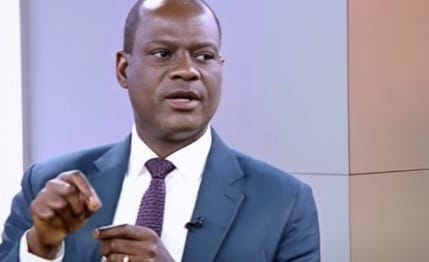
The Minister of Finance and Coordinating Minister of the Economy, Taiwo Oyedele, has cautioned governments against introducing new taxes or increasing existing tax burdens on vulnerable citizens and productive sectors, warning that such measures could deepen economic hardship.
Oyedele spoke on Tuesday on the sidelines of the 2026 annual meetings of the International Monetary Fund (IMF) and World Bank in Bangkok, Thailand, where he read a communiqué on behalf of the Intergovernmental Group of Twenty-Four (G24), which he serves as Chairman.
“This is the wrong time to impose new taxes or increase the burden of tax, particularly on the vulnerable population and productive sectors of the economy,” he said.
Responding to questions on how developing countries could reduce debt-servicing costs without cutting essential public spending, Oyedele urged governments to identify waste, find savings and improve revenue collection before placing additional financial pressure on citizens and businesses.
He said borrowing remained necessary to finance economic growth but stressed that governments must ensure that debt supports job creation and inclusive development.
“Borrowing and debt financing is a necessary condition for growth, and every country emerging, developing must be able to apply debt financing in a way that is overall of positive impact, particularly to stimulate job-rich and inclusive growth,” he said.
The minister also called for available public funds to be prioritised for essential services, including healthcare and education, while private capital could help finance other areas of investment.
On the choice between taxation and borrowing, Oyedele said both options carried consequences and should be considered in the context of their impact on household welfare.
“If you collect taxes, you raise the money now, and that itself has a lot of trade-offs. What taxes are you collecting? You collect taxes from the most vulnerable, and this will deprive them of money to provide food, health, education,” he said.
He argued that excessive taxation could leave low-income households with less money for basic needs, while borrowing also carried future obligations.
“Debt is future taxes, so it’s not one or the other. It’s to strike a balance, bearing in mind ultimately that the essence of tax and of debts is to cater for the people,” Oyedele said.
…IMF warns of rising poverty, food insecurity
Meanwhile, the International Monetary Fund (IMF) has upgraded its forecast for Nigeria’s economic growth in 2026 to 4.2 percent from 4.1 percent, while warning that higher food and energy prices could worsen poverty and food insecurity.
The Washington-based institution announced the revision in its October 2026 World Economic Outlook (WEO) report released on Tuesday.
The IMF said Nigeria’s economy is benefiting from improved macroeconomic stability and favourable terms-of-trade effects, but warned that rising prices of essential goods would put further pressure on households.
“Higher prices for essentials are expected to further aggravate poverty and food insecurity,” the fund said.
At a press briefing on the report, Deniz Igan, chief of the IMF research department’s world economic studies division, said the government needs to balance immediate support for households with the need to maintain fiscal stability over the medium term.
“What we are advocating for is for policymakers to balance the near-term needs of the population, and that involves food security, that involves energy security,” Igan said.
She said the cost of food and energy is rising disproportionately in Nigeria, making it harder for vulnerable households to cope with the cost of living.
Using Nigeria as an example, Igan said economic growth had held up partly because the country exports energy, but poverty risks remain high.
“While the growth held up in Nigeria, given energy exporter, poverty risks are still very high,” she said.
“What we’re advocating for is cash transfers, income support, targeted temporary income support for the most vulnerable households in Nigeria.”
The IMF research chief said such interventions should be consistent with the government’s medium-term fiscal framework.
The IMF expects economic growth in sub-Saharan Africa to remain at 4.5 percent in 2026, although it said the regional forecast masks significant differences among countries.
The report said growth prospects depend on countries’ fiscal capacity, progress with reforms, exposure to commodity prices, climate shocks and access to external financing.
UPDATE NEWS:
Nigerians can now invest ₦2.5 million on premium domains and profit about ₦17-₦25 million. All earnings paid in US Dollars. Rather than wonder,
click here to find out how it works.
[ad_2]
Source link