
The Kano state government has breathed new life into its entrepreneurship institutes after years of inactivity, with 6,400 of youths and women now enrolled in training programmes across the state.
For years, many of the state’s 26 entrepreneurship institutes remained idle, their facilities underutilised and their mandate to equip citizens with practical skills largely unfulfilled.
But the situation is gradually changing as Governor Abba Kabir Yusuf said he is determined to make the revival of these centres a cornerstone of his development agenda.
The institutes, once regarded as dormant public assets, are now being repositioned as hubs of opportunity where beneficiaries can acquire skills, establish enterprises, and contribute to the state’s economy.
According to the state’s Commissioner for Livestock Development and member of the Steering Committee on Entrepreneurship Institutes, Dr. Aliyu Isah Aliyu, the latest phase of the programme has admitted 6,400 beneficiaries through a digital portal introduced in July 2026.
He said the beneficiaries are divided into two cohorts of Batch A and Batch B, each with 3,200 participants.
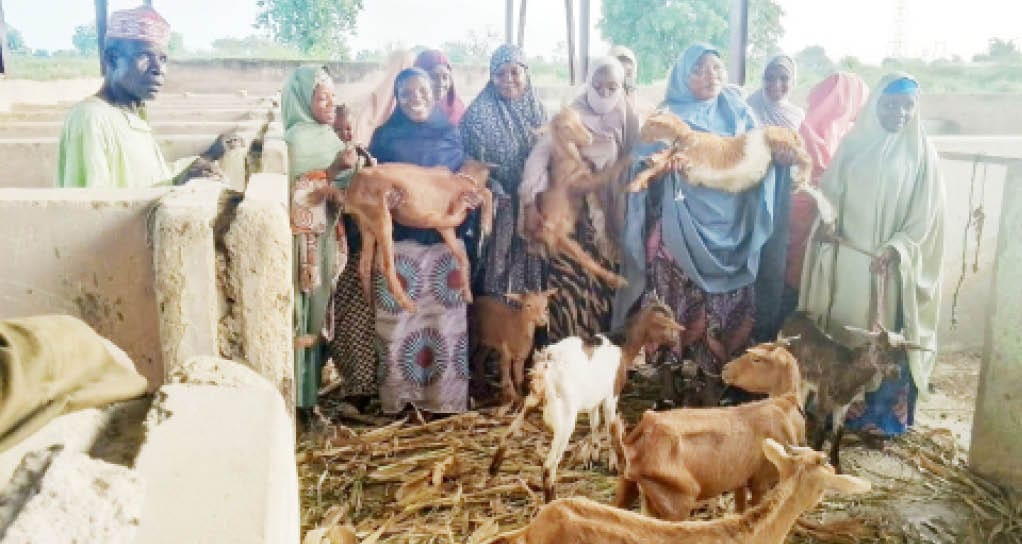
The Commissioner added, “Batch A commenced training last week in eight institutes, including the Informatics Institute (400 beneficiaries), Poultry Institute (600), Driving Institute (250), Entrepreneurship Institute (250), Hospitality Institute (200), Journalism Institute (200), Fisheries Institute (200), and Livestock Institute (200).
“The remaining three institutes: Corporate Security, Film, and Horticulture, are expected to begin training within two weeks, bringing the total number of institutes in the current cycle to 11.
The Steering Committee was directed by the Governor to ensure transparency in the admission process by making sure that applications and screening were conducted through an online portal, with officials emphasising merit, fairness, and equal opportunity.

“This directive was clear: competence and fairness must guide the process,” the committee member said, noting that the digital system was designed to eliminate bias and ensure inclusivity.
For institutes requiring boarding arrangements, such as Livestock, Informatics, Fisheries, and Poultry, the government has made provisions for accommodation, feeding, and training equipment.
The committee member said these measures are aimed at ensuring effective learning and reducing barriers to participation.
The administration has also pledged empowerment packages for all 3,200 Batch A beneficiaries, enabling them to translate acquired skills into viable economic opportunities.
One notable feature of the programme is the high participation of women. Dr Aliyu described it as a deliberate effort to expand access to economic opportunities for women, strengthen households, and promote self-reliance.
“By empowering women, we are not only supporting families but also widening participation in Kano’s productive economy,” he added.
The initiative is also designed to run in cycles. Once Batch A completes its training, another 3,200 beneficiaries under Batch B will be enrolled across the same institutes.
The commissioner said this system will create a sustainable pipeline through which thousands of Kano citizens can continuously access skills and empowerment opportunities.
He said Governor Yusuf has repeatedly emphasised that reviving the institutes is only the first step, and ensuring they remain functional, adequately equipped, and continuously populated with beneficiaries is what gives the initiative its true meaning.
It has also been noted that the revival of the institutes reflects the administration’s broader focus on human capital development.
By prioritising skills acquisition and entrepreneurship, the government aims to tackle unemployment and foster economic resilience.
“The ultimate value of government is measured not merely by the institutions it builds, but by the lives those institutions transform,” Governor Yusuf said recently.
The revival of the institutes was part of the governor’s campaign blueprint before assuming office. With more than 10,000 youths and women already reached through previous cohorts and the current phase, the commissioner said the administration is delivering on its promises.
“This is not just about infrastructure; it is about transforming lives. Every skill acquired, every enterprise established, and every livelihood created represents progress for Kano State,” Aliyu added.
As successive cycles of training unfold, the administration said it hopes to build a sustainable system that continuously empowers citizens.
The institutes, once dormant, are now being positioned as engines of growth and development. For many beneficiaries, they said the revival represents more than training, it is a pathway to self-reliance and economic inclusion.
UPDATE NEWS:
Nigerians can now invest ₦2.5 million on premium domains and profit about ₦17-₦25 million. All earnings paid in US Dollars. Rather than wonder,
click here to find out how it works.