
The dispute between Dangote Petroleum Refinery and major fuel marketers has deepened after the refinery stopped selling Premium Motor Spirit (PMS), commonly known as petrol, to marketers that continue to import petroleum products into Nigeria.
An official of the refinery confirmed the development, saying the decision was taken to prevent its locally refined petrol from being mixed with imported products and subsequently sold as Dangote fuel.
“We are not selling petrol to those who are importing, since they are trying to blend our high-quality products with their ultra-low-quality imported products,” the official said.
Another source familiar with the refinery’s distribution operations said the facility is now prioritising independent petroleum marketers and other buyers that do not import petrol.
“We are selling to independent marketers and others who are not importing,” the source said.
Analysts say the development could reshape the sourcing strategies of major oil marketers that have continued to combine domestic distribution with petroleum product imports.
It has also triggered mixed reactions within the downstream sector, with stakeholders divided over whether the refinery’s decision represents a legitimate business strategy or raises broader concerns about competition in the petroleum market.
The National President of the Petroleum Products Retail Outlets Owners Association of Nigeria (PETROAN), Dr Billy Gillis-Harry, said his organisation was indifferent to the refinery’s decision, noting that Dangote had the right to determine how it operated its business.
“We remain indifferent to his decision to cut fuel supply to fuel importers since Dangote is the owner of his asset. Let him do whatever he likes with his business,” Gillis-Harry said.
He, however, said it was up to the government to determine whether to allow the refinery to operate without intervention or ensure that its activities remain within established industry rules.
Energy expert Rasheed Adeleke, meanwhile, said the decision should not necessarily be interpreted as an attempt to establish a monopoly.
According to him, the refinery is seeking to protect the quality and identity of its products by prioritising independent marketers and other distributors that do not import competing petrol.
He argued that mixing Dangote’s Euro-5 petrol with imported products could make it difficult for consumers and regulators to distinguish between products originating from the refinery and those imported by marketers.
Adeleke said greater support for local refining could help reduce Nigeria’s dependence on imported petroleum products while strengthening domestic value addition.
The latest development comes as Dangote Industries President, Aliko Dangote, continues to advocate for increased investment in domestic refining.
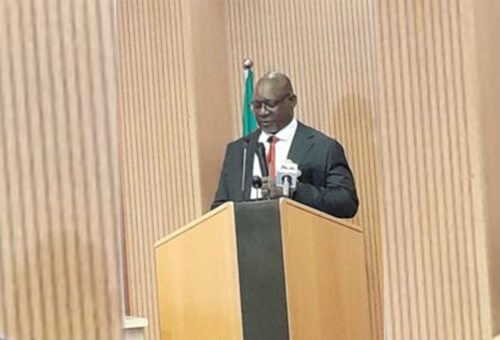
Speaking at the Nigeria Oil Refining Summit 2026 in Lagos, Dangote said Nigeria needed more refineries because one facility alone could not create the refining industry required to meet the country’s energy needs.
According to him, crude receipts by domestic refineries had risen to about 683,000 barrels per day in August 2026, while crude oil and condensate production reached about 1.74 million barrels per day in June.
“Today, Nigeria is moving away from the contradiction of being a major crude producer that depends on imported fuel. But building refineries is only the beginning,” he said.
Dangote stressed that Nigeria needed “many successful refineries — large, medium, modular and specialised” to transform crude resources into jobs, foreign exchange and industrial growth.
He also called for a competitive downstream market in which imported and locally refined products compete under equivalent regulatory, quality, tax and commercial conditions.
Dangote identified reliable access to crude, predictable policies on pricing, imports, taxation and foreign exchange, as well as better refinery infrastructure, as critical to attracting further investment.
He also highlighted the need for ports, pipelines, storage terminals and roads to reduce the high cost of moving refined products by road.
“If government provides an enabling and predictable environment, and if the private sector continues to invest, innovate and compete, I am confident that Nigeria can become not merely self-sufficient in refined petroleum products, but Africa’s leading refining and petrochemical hub,” he said.
UPDATE NEWS:
Nigerians can now invest ₦2.5 million on premium domains and profit about ₦17-₦25 million. All earnings paid in US Dollars. Rather than wonder,
click here to find out how it works.