
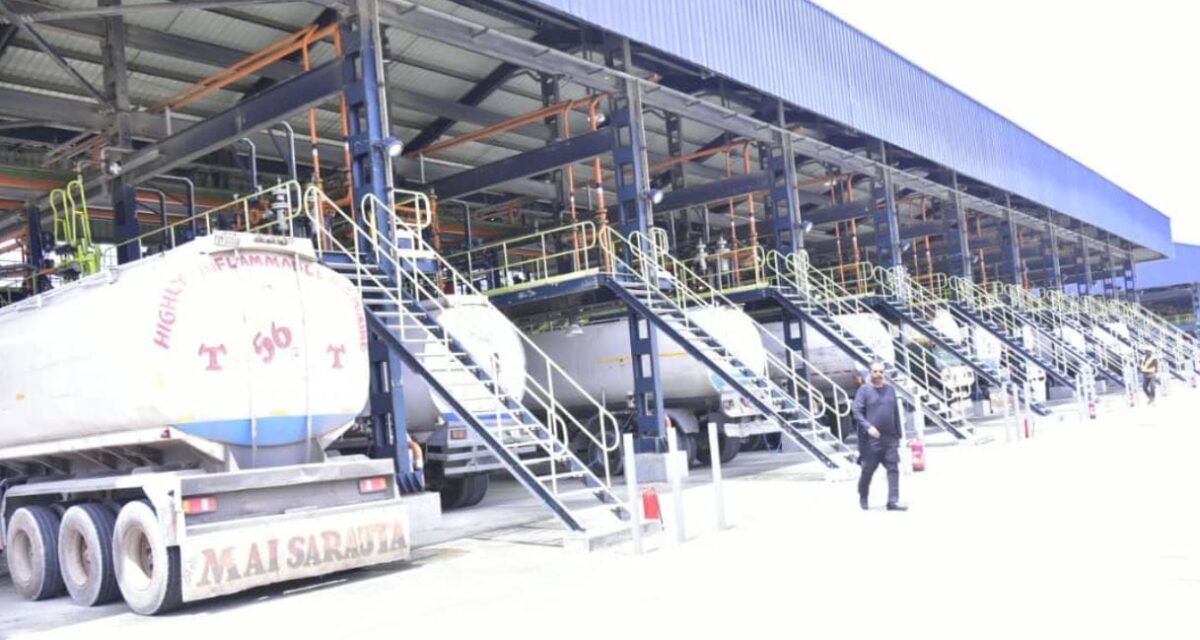
The Independent Petroleum Marketers’ Association of Nigeria (IPMAN) has said the association has no problem with the decision of Dangote Refinery and Petrochemical to stop the sale of petroleum products to importers.
President of IPMAN, Alhaji Abubakar Maigandi spoke with Daily Trust against the backdrop of the decision by the refinery to stop sale of premium motor spirit otherwise known as petroleum to major marketers importing PMS.
Daily Trust reports that an official of the refinery had confirmed the development even as the refinery insisted that the marketers continue to blend Dangote fuel with imported grades.
However, some of the major marketers who spoke with Daily Trust in confidence while expressing shock over the decision insisted they would not be deterred in their bid to stop monopolistic tendencies in the downstream sector.
According to them, for energy security, it would be good to have different options.
However, IPMAN President said his members have no problem with Dangote Refinery’s decision, disclosing that IPMAN members now receive direct supply from Dangote.
Also speaking with our correspondent, a former Chairman of IPMAN, Ejigbo Satellite Branch, Lagos, Akinrinade Akinade, described the ongoing debate over fuel import licences issued to major petroleum marketers as a move by the government to maintain balance in the downstream oil sector.
Akinade said Dangote Petroleum Refinery has sufficient products to meet the needs of the Nigerian market, arguing that continued importation could undermine the refinery’s position as a major domestic supplier.
“Dangote is not comfortable with NMDPRA giving licences to major marketers. Even the PIA says if we have sufficient product, we should stop importation,” Akinade said.
He noted that the Petroleum Industry Act (PIA) provides for the reduction or stoppage of petroleum product imports when domestic supply is sufficient, adding that products from the Dangote refinery could adequately serve the country.
According to Akinade, the controversy reflects the growing influence of the Dangote refinery in Nigeria’s petroleum market. He described Dangote’s opposition to the licensing of major importers as an attempt to protect its position in the downstream sector.
“He is just trying to flex muscle,” Akinade said, while stressing that there was also a need to maintain competition in the industry.
He said Nigeria should encourage alternative sources of petroleum products to avoid excessive dependence on a single supplier.
“On the other side, we want to see an alternative to Dangote so that we are not held to ransom,” he said.
Akinade warned that any major disruption to petroleum supply could have serious consequences for the Nigerian economy, given the importance of petrol and other refined products to transportation and economic activity.
“Any problem in the petroleum supply, Nigeria would be on fire. The government is just trying to balance the game,” he said.
Akinade commended the quality of products from the Dangote refinery, saying motorists appeared to be experiencing cleaner fuel since the refinery began supplying the domestic market.
“Since Dangote started, fewer vehicles smoke on our roads. It attests to the fact that the quality of Dangote fuel is very high,” he said.
He also backed measures to prevent the adulteration of petroleum products produced by the refinery, arguing that maintaining product quality would be important for consumers and the wider downstream sector.
“I think he is on track on that, to ensure they don’t adulterate what is produced from the refinery,” Akinade added.
…Product integrity debate signals progress – Expert
Oil and gas industry analyst, Dr. Ayodele Oni in a chat with our correspondent said the current development indicated that “Nigeria’s domestic refining has matured to the point where a local refiner can insist on standards for how its product reaches the market.”
He described the growing debate over the regulation of petroleum product imports and the protection of locally refined products as evidence of progress in Nigeria’s downstream oil sector.
According to Oni, Nigeria has moved beyond the longstanding question of whether the country could refine petroleum products to a more advanced debate over how domestic refiners can protect the quality and integrity of their products.
Oni said concerns over the possible blending of imported petroleum products with locally refined products were legitimate, particularly for a refinery seeking to establish a strong reputation for quality in domestic and international markets.
He noted that a refinery that has built its reputation around international specifications and whose aviation fuel is competing in European markets has a strong reason to prevent its products from being mixed with imports of uncertain quality and subsequently sold under its brand.
“Brand integrity is not a luxury in a fuel market; it is consumer protection,” he said.
However, Oni argued that protecting product integrity should not rely solely on restrictions based on import licences. He said a more sustainable regulatory framework would involve stronger mechanisms for tracking petroleum products throughout the supply chain.
“The policy question is how to make that protection durable,” he said, adding that product traceability, clear no-blend provisions in supply contracts and robust quality testing by the regulator would provide a stronger long-term solution.
The expert also pointed to the continuing role of imported petroleum products in the Nigerian market, saying the level of imports makes the debate over domestic refining and imports particularly important.
“With imports reaching roughly 43 per cent of supply in July, there is a real conversation to be had about the balance between local refining and imports,” he said.
Oni maintained that the appropriate institutions for resolving the dispute are the industry regulator and the courts, particularly as Dangote’s challenge to the regulatory position is already before the judiciary.
“The right forum for settling that balance is the regulator and the courts, where Dangote’s challenge is already pending,” he said.
UPDATE NEWS:
Nigerians can now invest ₦2.5 million on premium domains and profit about ₦17-₦25 million. All earnings paid in US Dollars. Rather than wonder,
click here to find out how it works.