
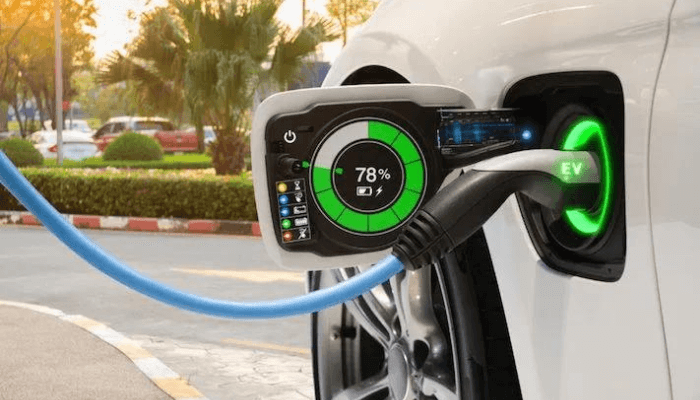
Nigerian electric vehicle (EV) manufacturers and importers have raised concerns over difficulties accessing foreign exchange through commercial banks, warning that the challenge is increasing the cost of importing vehicles, components and equipment needed to grow the country’s electric mobility industry.
The operators said limited access to foreign currency, high borrowing costs and dependence on imported components were making it difficult for local businesses to compete with international manufacturers and suppliers.
Their concerns come amid Federal Government efforts to encourage EV adoption, promote domestic assembly and reduce dependence on petrol-powered transportation through import incentives and local manufacturing policies.
EV operators seek easier access to forex
Chairman of The ROXETTES Group and ROXETTES Eco-Drives Ltd, Dr Kaycee Orji-Kelechi, said businesses importing electric vehicles and components need more efficient access to foreign exchange through the banking system.
He urged banks to review their processes to ensure legitimate businesses can obtain foreign currency through the official market without unnecessary delays.
- “Most of our forex we buy from the black market. If we go through the banks with letters of credit, the process is not as smooth. So, it’s always easier to go to the black market and do your business,” he said.
Another industry operator, Mr Kelvin Adelakun, also called for measures to narrow the gap between the official and parallel market exchange rates.
- He said the government should examine the processes banks use to ensure businesses can access foreign exchange through the official market more seamlessly.
- Adelakun, however, said forex access was not necessarily the biggest challenge facing local EV manufacturers, pointing instead to differences in import-duty concessions for foreign competitors and the high cost of financing.
He explained that local manufacturers had invested heavily in assembly facilities and production capacity but continued to face operating costs that made it difficult to compete with imported vehicles.
Importers face payment delays
The concerns extend beyond EV manufacturers to vehicle importers, who say difficulties obtaining foreign currency through commercial banks can delay payments to overseas suppliers.
Biodun Osabinu of Abuja-based Devex Autos said importers with genuine orders still struggle to obtain the dollars needed to pay suppliers on time.
- “An independent importer with a genuine order still struggles to get the dollars they need on time, and that is most of the market,” Osabinu said.
He explained that uncertainty over the timing and cost of foreign exchange forces businesses to build additional buffers into their prices while tying down working capital.
- “What it does to a business is force you to price in uncertainty. You do not know what a dollar will cost you by the time your payment clears, so you build a buffer into everything, and your working capital sits frozen in inventory instead of moving,” he said.
According to him, the resulting costs are eventually passed on to consumers through higher prices, while some products become unavailable when importers cannot finance orders on time.
The challenge is particularly significant for the EV industry, which relies on imported vehicles, batteries, electronic components, charging equipment and specialised manufacturing machinery.
High borrowing costs pressure manufacturers
Beyond forex constraints, local EV manufacturers say expensive bank loans are increasing production costs and limiting their ability to expand.
Orji-Kelechi said interest rates on loans obtained from Nigerian banks to finance vehicle imports could approach 40%, raising the cost of bringing vehicles into the country.
- “Another major challenge is the cost of financing. Interest rates on loans obtained from Nigerian banks to finance vehicle imports can approach 40%. When we borrow at those rates and bring vehicles into the country, our costs are significantly higher,” he said.
He contrasted the financing conditions facing Nigerian businesses with those of foreign manufacturers, who he said could access funding at considerably lower interest rates.
- Osabinu said, “Meanwhile, foreign companies may have access to financing at near-zero interest rates. They can therefore introduce their vehicles into the Nigerian market at lower prices, while local manufacturers must charge more to cover their production costs and repay their bank loans.”
He said local manufacturers were left with a difficult choice: increase prices and risk losing customers to cheaper imports or reduce prices and struggle to cover production costs and loan repayments.
Nigeria’s electric vehicle ambitions
Nigeria has been promoting electric mobility as part of its broader energy transition, with incentives aimed at encouraging vehicle imports and domestic manufacturing.
In April 2026, the Federal Government announced import duty waivers on electric vehicles, mass transit buses and manufacturing machinery to support investment and ease transportation costs.
However, industry operators want a more coordinated incentive framework that supports local manufacturers alongside importers.
- Orji-Kelechi said Nigeria needs affordable long-term financing, incentives for local assembly, technology transfer and investment in charging infrastructure to develop a competitive EV industry. He added that the country should move beyond importing finished vehicles to producing local components and manufacturing technologies, with the longer-term ambition of exporting vehicles to other African markets.
- The sector also faces other constraints, including inadequate charging infrastructure, unreliable electricity supply, high capital expenditure and limited technical support.
- The challenges come against the backdrop of Nigeria’s foreign exchange reforms, which began on June 14, 2023, when the Central Bank of Nigeria adopted a willing-buyer, willing-seller model and unified the market by consolidating the previous segmented windows into the Nigerian Foreign Exchange Market. Nairametrics previously examined the reforms and their effects.
For industry operators, improving access to foreign exchange, lowering financing costs and strengthening incentives for domestic production will be central to expanding Nigeria’s electric vehicle manufacturing capacity.